


Two items landed two days apart in October. One came from bank supervisors, the other from a venture-funded startup. Read together they describe a single requirement arriving from both directions at once.
The supervisory question
On October 13, Reuters reported, citing six people familiar with the matter, that banking regulators are stepping up efforts to contain AI risks. The specific questions are the useful part. Supervisors are asking whether banks can clearly track and audit AI agent decisions, what safeguards exist to prevent agents from exceeding their authority, whether humans remain involved in key decisions, and how banks can shut down autonomous systems. In Europe, supervisors including the Bank of England and the European Central Bank are involved, and euro zone banks have been asked to map how AI is being used across their businesses and third-party providers.
Two caveats belong on this. The reporting rests on anonymous sources, and the Office of the Comptroller of the Currency, the Federal Reserve and the Federal Deposit Insurance Corporation declined to comment. And per the same reporting, regulators are still gathering information and are not yet being prescriptive about what lenders should be doing. These are exam-room questions, not rules.
They are also not hypothetical. Questions asked in routine examination become expectations long before they become guidance.
The market's answer, arriving independently
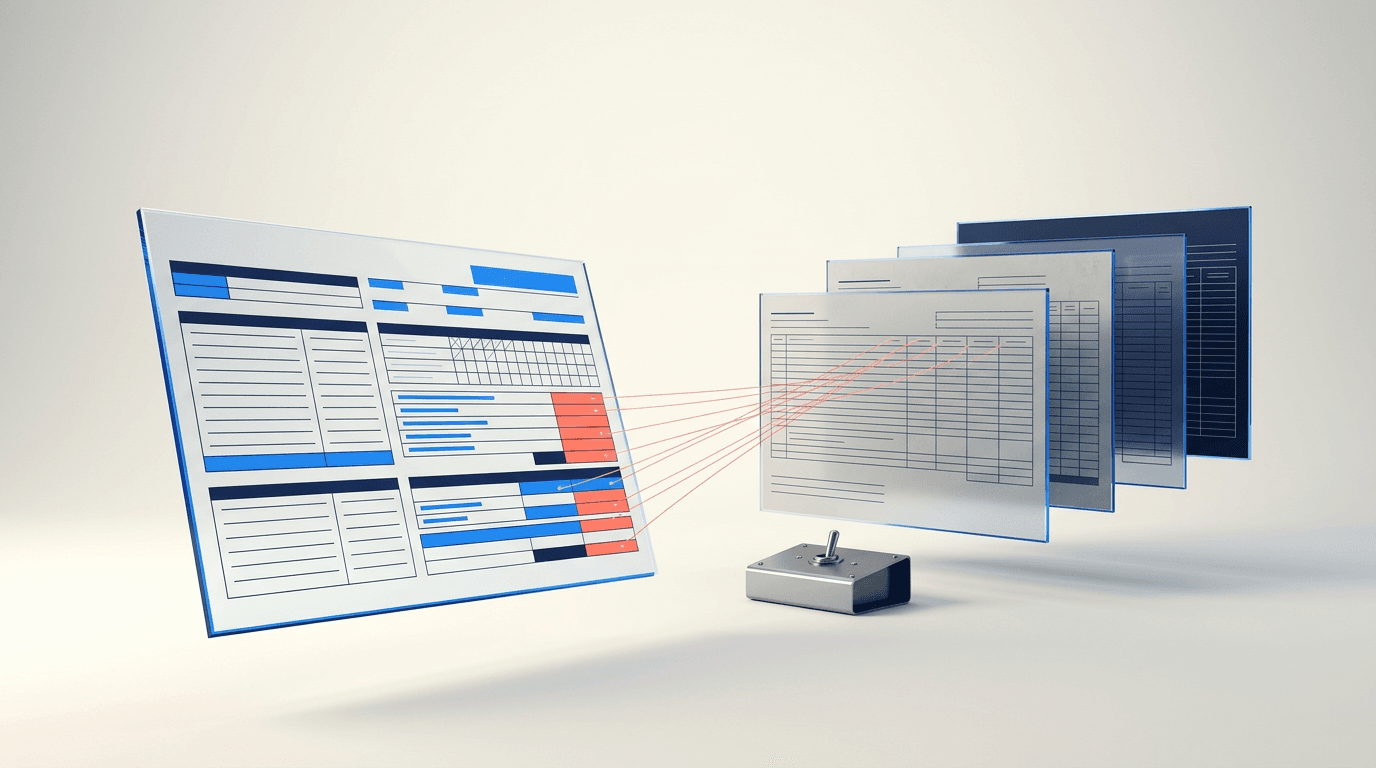
On October 15, The Next Web reported that CarbonAI raised 12 million dollars to automate commercial real estate underwriting with AI agents. According to the company's announcement as reported there, its agents pull figures from rent rolls, leases, financial statements and legal documents, build the underwriting model, draft the memo and flag risks, and each number links back to its source document. Decisions needing human judgment go to the lending team. Greystone is the only customer named.
One funding round is not evidence of a market standard, and company descriptions of their own products are marketing until a credit team tests them. But note what is being led with. Not speed, not coverage. Traceability from a figure back to the document that produced it.
Provenance is now both a feature and an answer
"Each number links back to its source document" is, almost word for word, a response to "can you clearly track and audit AI agent decisions." That convergence is the signal worth taking from October. The thing a vendor is selling and the thing an examiner is asking about have become the same artifact.
This is a shift in what counts as a good AI system in lending. For two years the implicit test was output quality: does the memo read well, is the model plausible. The test now forming is evidentiary: can you reconstruct how the number came to exist. A system that is right but cannot show its work is harder to defend than one that is occasionally wrong and fully traceable.
There is still no supervisory validation standard aimed at these tools. When the banking agencies revised model risk guidance on April 17, 2026, the OCC release stated that generative AI and agentic AI models "are novel and rapidly evolving" and that "they are not within the scope of this guidance." So institutions are answering examiner questions with evidence of their own design.
The half nobody is selling
Provenance is a design decision you can buy. Shutdown is an operational one you cannot.
No vendor leads with "we switched the agents off mid-pipeline and the deal flow kept moving." Yet that is explicitly among the questions being asked: how banks can shut down autonomous systems, and what stops an agent exceeding its authority. Those are rehearsal questions. They are answered by having done it, in a controlled way, and written down what broke.
Four things follow for an institution running or buying agents in deal review:
- Require per-figure provenance, including the file version. "It came from the rent roll" is not an audit trail if three rent rolls exist.
- Write down the agent's authority limits, and test what happens at the boundary rather than assuming the prompt holds.
- Rehearse the shutdown. Know what degrades, what queues, and what silently continues.
- Map third-party dependencies. The euro zone question is pointed at providers, and most agents are someone else's model behind an interface.
The institutions that will answer these questions well in a year are the ones treating them as engineering work now, while they are still only questions.