

No‑Code, Full‑Power Browser Automation with Open Operator

Agentic Assets Research Team
AI Solutions Architect
April 18, 2025
7 min read
Banish brittle web macros. Browserbase’s Open Operator is an open‑source agent that watches you perform a web task once, then turns your clicks into code you can rerun or share with an API. Imagine telling your laptop ‘download last month’s Stripe invoices and email me a summary’, and it just happens.
Why Natural‑Language Automation Matters
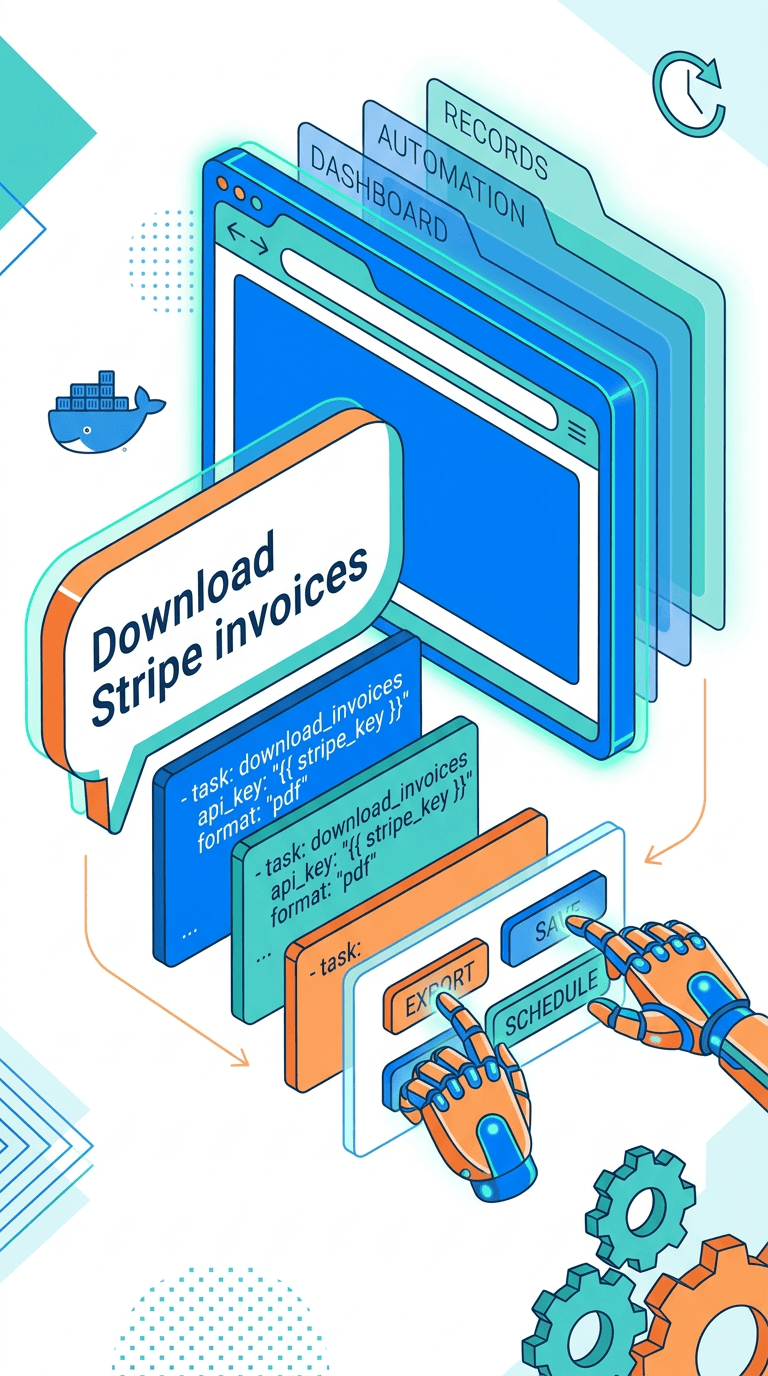
RPA pioneered drag‑and‑drop bots, but most business users never moved past Excel. Open Operator democratizes automation by accepting plain English and storing actions as a deterministic JSON trace.
Quick‑Start Guide for Non‑Coders
- Install Docker. Pull the Open Operator container and launch the local dashboard.
- Record a session. Click through the workflow once while narration is transcribed to steps.
- Save & schedule. One click publishes a cron job that runs every morning.
Under the Hood for Developers
1. DOM Diffing Engine
Instead of storing XPaths that break on redesigns, Open Operator captures semantic targets, ‘button labelled Pay Invoice’, and re‑identifies them with a scoring model on every run.
2. Composable YAML
The JSON trace compiles to editable YAML so you can insert API calls or conditionals between browser steps.
3. Observability
Each run streams logs and screenshots to a dashboard, giving you enterprise‑grade audit trails without Splunk fees.
Beyond Single Tabs, Meet Amazon Nova Act
For workflows that exceed a single page, Amazon’s Nova Act agent chains reinforcement‑learning policies to navigate multi‑step forms. You can import Nova Act as an Open Operator plugin, gaining deeper reasoning without sacrificing transparency.
Case Studies
- E‑commerce brand, Scrapes competitor prices hourly, updates Airtable, and triggers Slack alerts when margins dip below 10 %.
- HR team, Auto‑posts openings to five job boards and pings candidates via Gmail once their LinkedIn profile matches keywords.
- Analyst desk, Downloads 10‑K filings and feeds them into a Claude agent for KPI extraction.
Security & Governance
All secrets live in environment variables, and you can run the headless browser inside a firewalled VPC. Role‑based access ensures junior staff can trigger jobs without editing the definition.
Next Steps
Beginner? Follow the five‑minute Quick Start on GitHub.
Power user? Connect Open Operator with LangChain to build a hybrid agent that decides whether a task needs browsing, an HTTP call, or a shell script.
Ready to kill busy‑work? Agentic Assets offers white‑glove integration packages and training workshops.
Sources
Share this article
Related Articles

Why n8n Leads AI Agent Development in 2025: Hybrid No-Code/Code Power, Integrability, and Scalability
Discover how n8n’s unique blend of no-code flexibility and deep codability empowers enterprise-grade AI agent development and multi-agent orchestration, making it the premier platform for 2025 and beyond.

Claude for Financial Services: Enterprise AI Platform Transforming Real Estate Finance in 2025
Discover how Anthropic's Claude for Financial Services is revolutionizing real estate finance through enterprise-grade AI agents, automated modeling, and seamless data integration, delivering proven 20% productivity gains across major financial institutions.

Multi-Agent AI Systems: Transforming Real Estate Finance with $34B in Projected Efficiencies
Discover how multi-agent AI systems are revolutionizing institutional real estate finance, with Morgan Stanley projecting $34B in operational efficiencies by 2030 through advanced automation and orchestrated workflows.